



Heavy haul trucking is a specialized, complex sector of the transportation industry dedicated to the movement of oversized and overweight (OS/OW) cargo. It involves hauling loads that exceed the standard legal limits for size, weight, or both, which means they cannot be safely or legally transported on conventional tractor-trailers. This type of logistics is essential for large-scale infrastructure, energy, and construction projects in Ontario and around the world, as it is the only way to move massive, indivisible items like industrial machinery, power generators, and structural steel beams. The process demands specialized equipment, rigorous route planning, and extensive government permitting, setting it apart from standard freight logistics.
This article provides a detailed breakdown of what heavy haul trucking entails, the cargo it handles, the specialized equipment required, and the stringent regulatory environment—particularly within the Aurora and Ontario service areas—that ensures safety and compliance for every heavy haul trucking operation.
- Learn More >>>>>Heavy duty towing service
I. Defining the Boundaries of Heavy Haul Trucking
To understand what heavy haul trucking is, one must first understand the legal limits that define “normal” freight. Every jurisdiction, including the province of Ontario, sets maximum allowable dimensions and weights for commercial vehicles traveling on public roads. Loads that surpass any of these benchmarks are classified as oversized or overweight, automatically requiring heavy haul services.
Legal Thresholds in Ontario
While specific regulations can be complex and are often determined by the specific axle configuration of the truck and trailer, general dimensions that trigger the need for a specialized permit in Ontario include:
- Weight: The total gross vehicle weight (tractor, trailer, and load) generally must not exceed 63,500 kilograms (approximately 139,993 pounds) for a routine permit, though limits vary significantly based on axle spacing and tire size. Exceeding even the standard highway weight limits of roughly 48,000 kilograms (about 105,821 pounds) for a typical five-axle configuration often requires special permits.
- Width: Loads wider than 2.6 meters (8 feet, 6 inches) are often considered oversized.
- Height: Loads taller than 4.15 meters (13 feet, 7 inches) generally require special height clearance analysis.
- Length: Combination vehicles exceeding 23 meters (75.5 feet) are often classified as overlength.
Any load exceeding these baseline figures—especially non-divisible loads like heavy machinery—falls into the domain of heavy haul trucking.
The Cargo of Heavy Haul Trucking
Heavy haul trucking supports the backbone of major industries by moving items critical to development and operation. The cargo is almost always non-divisible, meaning it cannot be broken down into smaller pieces to fit on a standard truck.
Common loads that necessitate heavy haul trucking include:
- Construction and Mining Equipment: Massive excavators, bulldozers, wheel loaders, cranes, pile drivers, and large haul truck beds that are too wide or heavy for standard transport.
- Energy Sector Components: Wind turbine components (nacelles, blades, tower sections), electrical transformers, power generation modules, and industrial boilers.
- Industrial Machinery: Large press machines, stamping equipment, and industrial generators used in manufacturing plants.
- Modular Structures: Pre-fabricated homes, sections of modular office buildings, and large, custom-fabricated industrial tanks or vessels.
- Infrastructure Materials: Oversized bridge beams, structural steel components, and massive concrete slabs.
The successful movement of these items is what defines the specialized nature and expertise required for heavy haul trucking.
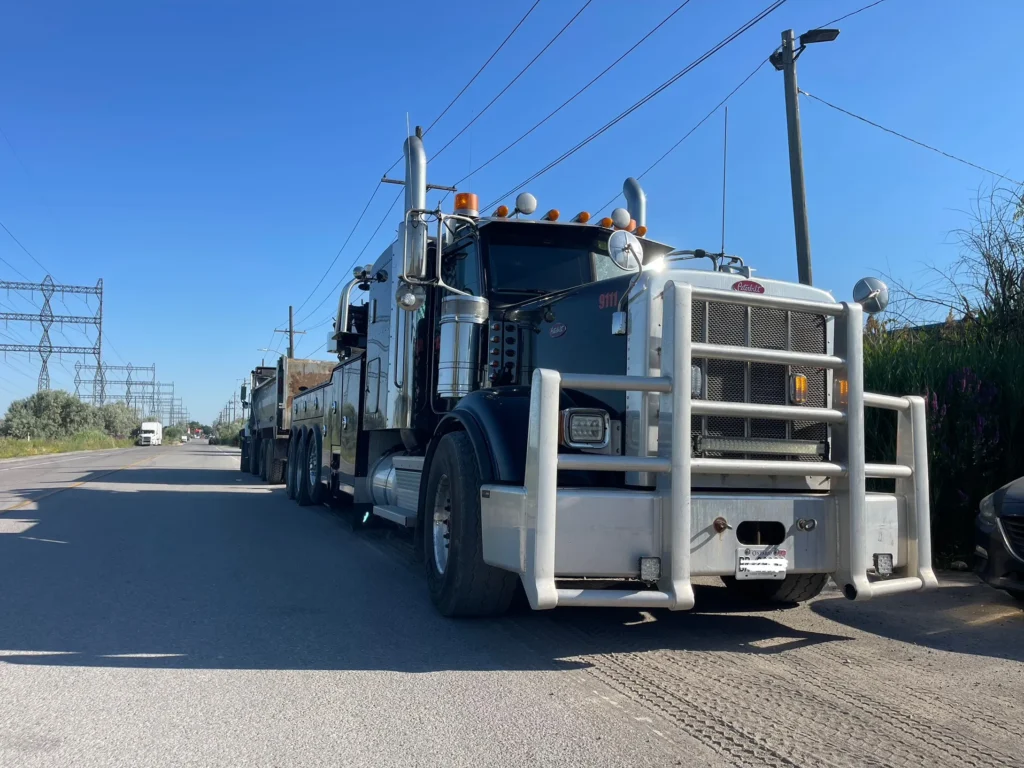
- Learn More >>>>>Construction machinery towing service
II. Specialized Equipment for Heavy Haul Trucking
The sheer size and weight of heavy haul cargo demand equipment far beyond a conventional tractor and dry van trailer. The entire rig—from the tractor (the truck) to the trailer—is engineered for maximum strength and load distribution.
The Heavy Haul Tractor
Unlike standard semi-trucks, heavy haul tractors are often referred to as “heavy haulers” or “super trucks.” They are built to pull extraordinary weights and feature several key differences:
- Engine and Drivetrain: Equipped with high-horsepower engines and reinforced transmissions capable of handling significantly higher gross weights.
- Axle Configuration: Often feature three or four drive axles (known as tandem or tridem axles) and specialized heavy-duty frames to distribute the immense weight of the load more effectively.
- Fifth Wheel: A heavy-duty fifth wheel coupling is required to manage the stress and torque transferred from the massive trailer.
Specialized Heavy Haul Trailers
The trailer is the most distinctive element of heavy haul trucking, engineered specifically to manage diverse dimensions and weights.
- Lowboy/Double Drop Trailers: These trailers have a well or “drop deck” in the center, which sits much lower than the axles of the truck. This design allows for the transport of extremely tall equipment (like large excavators or backhoes) while maintaining a legal overall height clearance for bridges and overpasses.
- Removable Gooseneck (RGN) Trailers: The neck of the trailer detaches from the tractor, creating a ramp that allows large, self-propelled machinery to be driven directly onto the deck. This is critical for loading non-running or extremely heavy equipment safely without the need for a crane.
- Multi-Axle Configurations: For extremely heavy loads, trailers can be custom-configured with multiple axles (up to 9, 13, or more) to spread the weight across a much larger surface area. This ensures that the weight per axle remains within the legal limits specified on the special permit, protecting the road and bridge infrastructure.
- Extendable Flatbeds/Step Decks: These are used for extremely long items, such as utility poles or bridge beams. They can be mechanically extended to accommodate the full length of the cargo.
The proper selection and configuration of this equipment are paramount, often requiring the heavy haul trucking company to have a vast, well-maintained fleet to meet the unique needs of each movement.
- Learn More >>>>>Best “Heavy Equipment Movers Near Me”: A 5-Step Guide
III. The Complex Logistics of Heavy Haul Trucking
The operational aspect of heavy haul trucking is a highly sophisticated discipline that goes far beyond simply driving. It involves extensive planning, regulatory compliance, and coordination.
Permitting and Route Surveys
Every jurisdiction the heavy haul load travels through requires a special, non-standard permit. In Ontario, these permits are issued by the Ministry of Transportation (MTO) and dictate every aspect of the move:
- Permit Acquisition: The heavy haul trucking company must apply for permits, providing precise details on the load’s dimensions, weight, axle configuration, and route. This process can take days or weeks, particularly for “superloads” (those exceeding even routine permit limits).
- Route Survey and Analysis: Before a single wheel turns, a detailed route survey is mandatory. This involves physically or digitally mapping the entire path to verify:
- Bridge Clearances: Ensuring the load can safely pass under every bridge and overpass.
- Bridge Weight Limits: Confirming the structural integrity of every bridge and culvert can support the immense total gross weight.
- Road Width and Turn Radius: Scouting for narrow intersections, tight corners, and obstructions like utility poles or traffic signals.
- Travel Restrictions: Permits typically impose severe time-of-day restrictions. Heavy haul loads are often restricted from traveling during peak rush hour, particularly in congested areas like the Greater Toronto Area (GTA), including Aurora. Night travel may be prohibited or may require special lights and reflective signage. Seasonal limitations, such as “Reduced Load Periods” in the spring to protect thawing roads, also impact scheduling.
Escorts, Pilot Cars, and Safety
Safety protocols in heavy haul trucking are the industry’s most stringent.
- Escort Vehicles: Depending on the dimensions of the load in Ontario, one or more private escort vehicles (or pilot cars) are legally required. For example, a load exceeding a certain width or length requires a front and/or rear escort to warn other motorists, manage traffic, and ensure the path ahead is clear.
- Police Escorts: For the largest, most disruptive superloads, police escorts may be mandatory to control traffic flow and ensure public safety.
- Securement: Cargo securement on a heavy haul trailer is an engineering feat. Specialized chains, binders, and securement points are used to lock the non-divisible load onto the trailer, preventing any movement during transit.
This level of planning and safety compliance is the reason heavy haul trucking is so highly specialized and regulated.
- Learn More >>>>>Choosing the Right Heavy Duty Tow Truck Services for Your Fleet
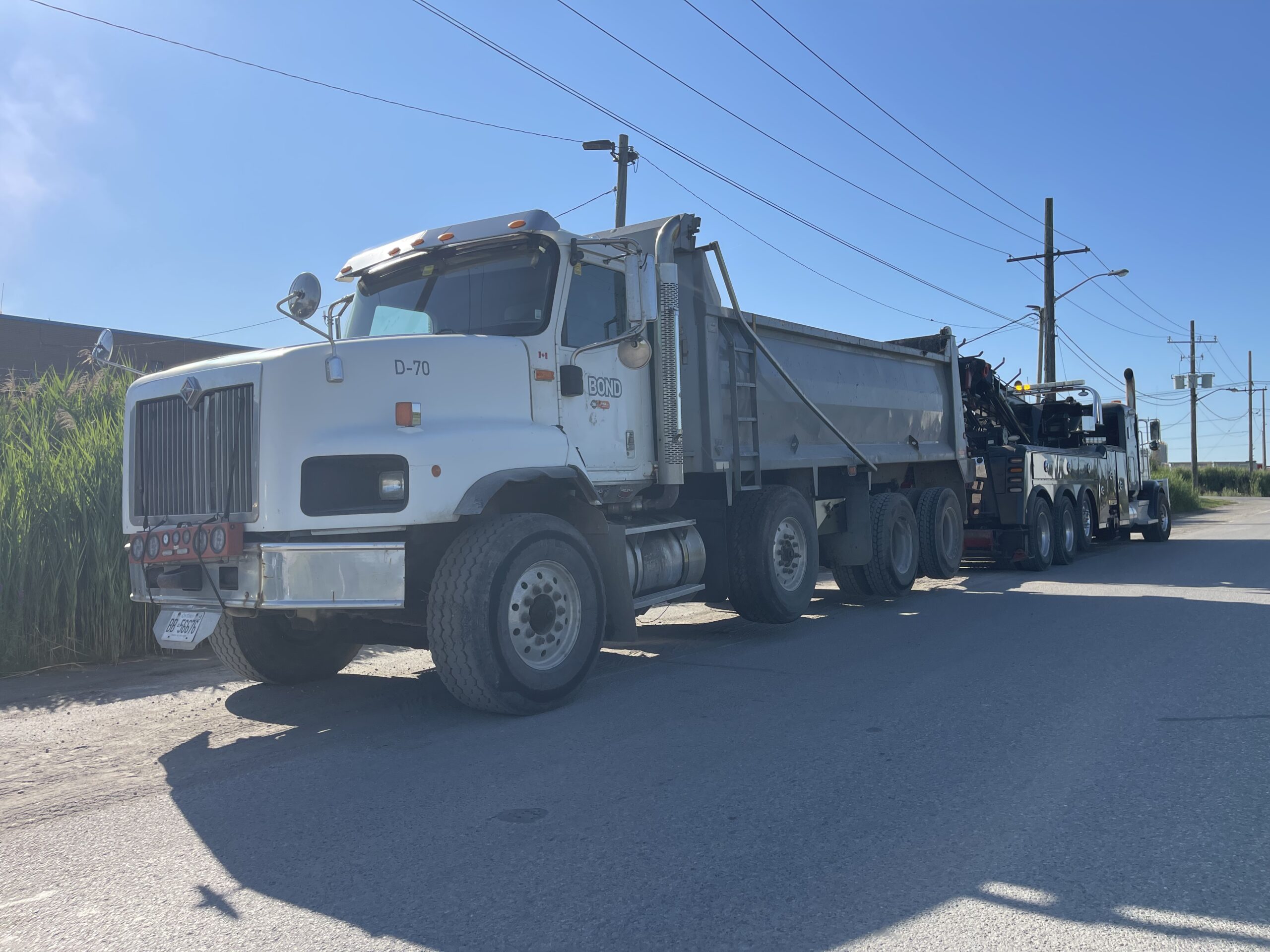
IV. Heavy Duty Towing and the Heavy Haul Connection in Aurora
While heavy haul trucking is focused on planned cargo logistics, it shares a foundational connection with heavy duty towing and recovery services, which are critical in the Aurora and GTA region.
The Overlap in Expertise and Equipment
Heavy duty towing, as offered by a local provider like Pars Towing, involves emergency and non-emergency services for large vehicles that typically utilize the roads in the heavy haul domain: commercial trucks, buses, RVs, and tractor-trailers.
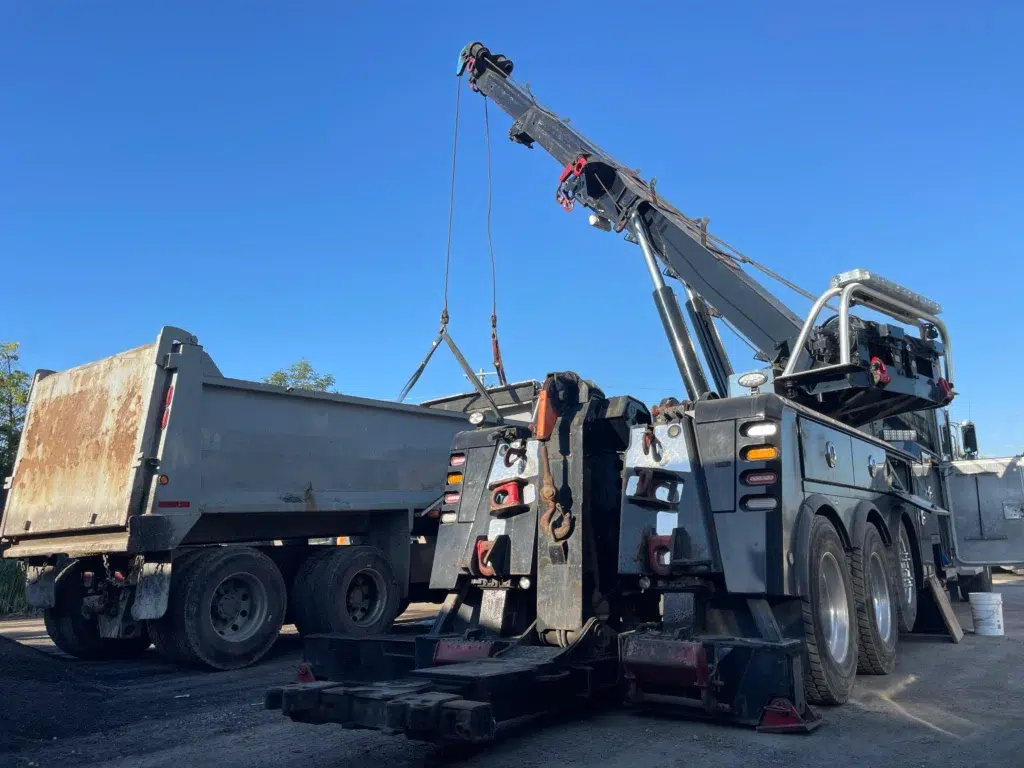
- Shared Fleet: The heavy wreckers and rotators used for towing and recovering an overturned tractor-trailer are built on the same principles as a heavy haul tractor—massive horsepower, multi-axle configurations, and reinforced chassis. The expertise to safely tow a disabled dump truck is directly transferable to the skills needed for complex cargo loading.
- Recovery and Logistics: If a heavy haul truck breaks down on Highway 400 near Aurora or a piece of heavy equipment needs to be recovered from a construction site, a local heavy duty towing specialist is the first responder. They perform the initial recovery, safely upright the disabled vehicle, and then tow it to the required destination. This recovery work requires the same meticulous planning, rigging skills, and understanding of weight distribution as any heavy haul trucking operation.
Pars Towing understands the unique needs of clients who require heavy haul trucking services in the Aurora area. Our expertise in complex heavy duty towing and recovery ensures that we not only have the right equipment but also the necessary operational knowledge to handle the weight and scale of commercial vehicles and machinery.
Why Local Expertise Matters for Heavy Haul
For construction and logistics companies operating in the region, partnering with a local company for both emergency heavy duty towing and logistics support is vital. Pars Towing’s local knowledge of the Aurora and York Region road network—including MTO contact points, local traffic patterns, and municipal restrictions—translates to faster response times for breakdowns and efficient planning for local heavy equipment moves.
- Learn More >>>>>Heavy Duty Towing Pickering
V. Conclusion: The Indispensable Role of Heavy Haul Trucking
Heavy haul trucking is not merely transportation; it is an indispensable engineering and logistical service that enables modern construction, resource extraction, and infrastructure development. From moving the enormous turbine of a power plant to transporting the largest construction crane for a new high-rise in the GTA, heavy haul trucking is the silent, powerful engine that keeps major projects moving forward.
The complexity of regulations, the necessity of specialized equipment, and the commitment to safety elevate this sector far above standard freight. For businesses in the Aurora area and across Ontario, choosing a logistics partner with proven expertise and the proper equipment, like Pars Towing’s heavy duty service, ensures that every massive load is transported safely, legally, and on time.
